
-
Call Us 0536 986 0950

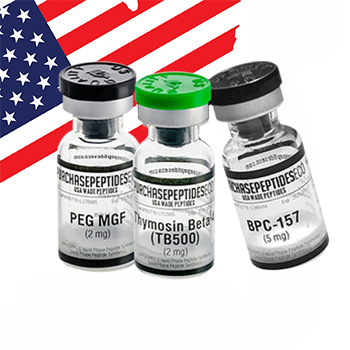
PEG-MGF, scientifically known as Pegylated Mechano Growth Factor, is a modified form of a growth factor associated with the body’s response to physical stress on muscle tissue. In its natural form, MGF (Mechano Growth Factor) is an alternative splice variant related to the IGF-1 (Insulin-like Growth Factor-1) gene and is involved in muscle growth, cellular regeneration, and tissue-repair processes.
PEG-MGF is a more stable version of this naturally occurring peptide created through a chemical process known as pegylation. This modification is intended to prolong the peptide’s stability and biological activity. As a result, researchers are interested in whether it may provide longer-lasting effects in muscle-related studies.
Pegylation is the process of attaching polyethylene glycol (PEG) to a molecule. This technique is commonly used in biotechnology to extend the half-life of biological compounds, reduce rapid degradation, and allow them to remain active for longer periods.
In the case of PEG-MGF, pegylation is intended to extend the activity of MGF. Native MGF is believed to have a relatively short biological half-life, whereas PEG modification may prolong its persistence.
This extended activity is one of the main reasons PEG-MGF has attracted attention in research involving muscle regeneration and growth-related signaling.
PEG-MGF is studied in connection with the biological response that follows muscle stress and microscopic tissue damage caused by exercise.
Research focuses on whether MGF-related pathways may:
Through these mechanisms, PEG-MGF has been investigated for its potential role in muscle development and post-exercise recovery.
One of the main limitations associated with native MGF is its relatively short duration of activity.
Pegylation is designed to improve the stability of PEG-MGF and prolong its biological persistence compared with non-pegylated MGF. This may allow the compound to remain available in experimental systems for a longer period.
However, precise pharmacokinetic behavior in humans has not been firmly established, and claims regarding exact duration of action should be interpreted cautiously.
PEG-MGF is commonly encountered in injectable research formulations. Its use remains experimental, and there is no clinically approved dosage or standardized human-use protocol.
Online or experimental discussions may mention approaches such as:
These approaches should not be considered medically validated instructions.
Because injectable research compounds carry risks related to sterility, contamination, dosage accuracy, and biological activity, unsupervised use may present serious health risks.
PEG-MGF has been investigated for possible effects including:
These effects remain primarily research-based and should not be interpreted as proven clinical benefits in humans.
Because PEG-MGF is an experimental compound, there is insufficient high-quality clinical evidence to establish its long-term safety.
Potential or theoretical risks may include:
Concerns involving abnormal cell growth are particularly relevant because MGF-related pathways are connected with cellular proliferation and growth signaling.
For this reason, PEG-MGF should not be used without appropriate professional oversight.
PEG-MGF differs from compounds such as IGF-1 LR3, HGH, and TB-500 because they act through different biological pathways.
These differences influence how each compound is studied and what biological processes researchers focus on.
Research on PEG-MGF remains limited and is largely based on animal models, laboratory studies, and mechanistic research.
Some experimental studies have investigated whether MGF-related signaling can help preserve muscle tissue or support regeneration under conditions involving muscle wasting or injury.
However, these findings have not yet established the effectiveness or safety of PEG-MGF for human therapeutic use.
Long-term safety, appropriate exposure levels, pharmacokinetics, and systemic effects remain important areas of ongoing research.
PEG-MGF is an experimental peptide-related compound that has attracted interest for its potential role in muscle regeneration and growth-related signaling. Pegylation is intended to improve its stability and extend its biological activity compared with native MGF.
Although it is frequently discussed among athletes and bodybuilding communities, there is currently insufficient scientific evidence to confirm its long-term safety or effectiveness in humans. For this reason, PEG-MGF should be regarded as a research compound rather than an approved muscle-building or recovery treatment.