
-
Call Us 0536 986 0950

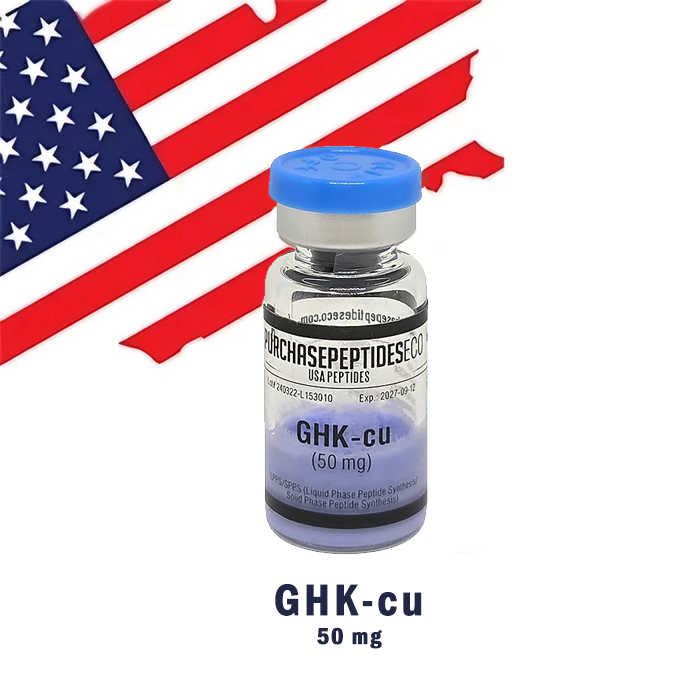
GHK-Cu (Copper Tripeptide-1), also known as Copper Tripeptide-1, is a specialized copper peptide composed of three amino acids—glycine, histidine, and lysine (GHK)—naturally found in the human body and bound to a copper ion. It has been extensively researched, particularly in areas related to skin quality, signs of aging, loss of elasticity, skin barrier support, and hair health, especially in women.
Skin aging is not limited to the appearance of wrinkles. Over time, several processes occur simultaneously, including decreased collagen and elastin production, reduced moisture retention, slower cellular renewal, oxidative stress caused by environmental factors, and weakening of the skin barrier. GHK-Cu has become a notable ingredient in cosmetic dermatology and skincare research due to its potential involvement in cellular mechanisms associated with these processes.
Research on GHK-Cu has attracted particular interest in areas such as mature skin, fine lines, loss of elasticity, dull and tired-looking skin, skin barrier support, and hair care applications.
GHK-Cu, known in English as Copper Tripeptide-1 and in Turkish as Bakır Tripeptid-1, is a copper peptide.
A peptide is a short-chain structure formed by amino acids linked together. GHK consists of three amino acids:
Glycine + Histidine + Lysine → GHK
When this three-amino-acid structure binds to a copper ion, the resulting complex is known as GHK-Cu or Copper Tripeptide-1.
One of the notable characteristics of GHK-Cu is that it naturally occurs in the human body. However, GHK levels may decrease with age, and this reduction has been proposed to be associated with the skin's natural renewal processes.
For this reason, GHK-Cu has become one of the peptides of interest in anti-aging and skin renewal research.
The primary reason GHK-Cu attracts attention is not simply its potential role as a moisturizing ingredient. Copper peptide is being investigated for its potential involvement in various biological signaling mechanisms within the skin.
Particular attention has been given to mechanisms involving fibroblast activity, the extracellular matrix, collagen synthesis, elastin structure, inflammatory processes, and wound healing.
Collagen is one of the key proteins responsible for maintaining the firm and resilient appearance of the skin.
Collagen production may decrease with age. As a result:
Research on GHK-Cu suggests that the copper peptide may be associated with collagen synthesis and extracellular matrix processes.
For this reason, GHK-Cu has an important place in skincare research focused on reducing the visible signs of aging.
In addition to collagen, elastin is another important component of youthful-looking and healthy skin.
Elastin is a structural protein that helps the skin return to its original shape after being stretched. Aging, sun exposure, and environmental stress factors can negatively affect elastin structure.
GHK-Cu has been investigated in relation to skin elasticity and firmness due to its potential mechanisms supporting the extracellular matrix structure of the skin.
Therefore, GHK-Cu is not only studied in relation to wrinkles but also in skincare approaches aimed at achieving skin that looks:
firmer, more elastic, and more vibrant.
Our skin is a living tissue that continuously renews itself.
Factors such as sunlight, air pollution, stress, irregular sleep, smoking, hormonal changes, and aging can affect this natural renewal process.
GHK-Cu has been investigated in relation to skin renewal and tissue repair processes due to its potential involvement with fibroblasts and the extracellular matrix.
This is one of the reasons why GHK-Cu has attracted interest in areas such as:
Signs of aging in women often become more noticeable around the eyes, forehead, mouth, and cheeks.
The formation of fine lines is influenced by many factors, including not only age but also collagen loss, changes in elastin, sun exposure, oxidative stress, and moisture loss.
Because GHK-Cu is associated with collagen and extracellular matrix processes, it has been studied for its potential role in improving the appearance of fine lines and wrinkles.
The goal is not simply to superficially conceal existing lines, but to target biological mechanisms that may contribute to a healthier and more supported-looking complexion.
Healthy-looking skin is not simply skin without wrinkles.
The ability of the skin to retain sufficient moisture, maintain barrier function, and withstand external factors is also important.
When the skin barrier becomes weakened, the following may occur:
Because GHK-Cu has been investigated for its potential role in supporting skin structure and extracellular matrix processes, it has also been studied in relation to skin quality and barrier function.
For this reason, copper peptide has attracted attention among modern skincare ingredients, particularly for dry skin and skin showing visible signs of aging.
The skin is exposed to environmental stress factors every day.
Sunlight, air pollution, cigarette smoke, and other environmental factors may contribute to oxidative stress in the skin.
Oxidative stress may contribute to damage to collagen and elastin structures, premature-looking skin aging, and an overall decline in skin quality.
Among the researched properties of GHK-Cu are mechanisms associated with antioxidant defense and oxidative stress.
Therefore, copper peptide is being investigated not only as a conventional anti-aging ingredient but also for its potential role in protecting the skin against environmental stress.
One of the most extensively researched areas involving GHK-Cu is tissue repair and wound-healing processes.
Following skin damage, fibroblast activity, collagen production, new tissue formation, and inflammatory processes work together.
Research suggests that GHK-Cu may support biological signaling pathways associated with these processes.
For this reason, copper peptide is considered a multifunctional peptide within the scope of:
skin renewal + collagen support + tissue repair + antioxidant mechanisms.
However, research-grade GHK-Cu products should not be used for the treatment of active, open, or infected wounds.
GHK-Cu is not only studied for skin-related applications.
It has also attracted attention in research involving hair follicles and scalp health.
Hair growth depends on the combined function of the hair follicle structure, blood supply, growth cycle, and various cellular signaling pathways.
Research has investigated whether GHK-Cu may be associated with cellular mechanisms surrounding hair follicles and tissue structure.
For this reason, copper peptide has attracted interest in areas such as:
It is important to note that GHK-Cu should not be considered a definitive treatment for hair loss. Hair loss can have many different underlying causes, including hormonal, genetic, nutritional, and dermatological factors.
Changes in skin aging and skin quality in women are not determined solely by chronological age.
Hormonal changes, high levels of stress, sleep problems, the postpartum period, menopause, sun exposure, and lifestyle factors can all affect the appearance of the skin.
As a result, modern skincare increasingly emphasizes active ingredients designed not only to provide surface-level hydration but also to support the skin's structure and natural renewal processes.
GHK-Cu is one of the copper peptides that has gained attention within this approach.
The main reasons GHK-Cu attracts interest among women seeking anti-aging skincare include:
Based on scientific research, the primary areas being investigated for GHK-Cu include:
✔ May support collagen synthesis,
✔ May support processes associated with elastin and the extracellular matrix,
✔ May influence fibroblast activity,
✔ May support skin renewal,
✔ May help maintain skin elasticity,
✔ May contribute to reducing the appearance of fine lines and wrinkles,
✔ May help support the skin barrier,
✔ May support mechanisms associated with oxidative stress,
✔ May contribute to a more vibrant and healthy-looking complexion.
✔ Has been investigated for cellular processes surrounding hair follicles,
✔ May support scalp health,
✔ Is being studied in relation to hair density and growth processes,
✔ Has been investigated for mechanisms that may support the tissue structure surrounding hair follicles.
One of the most important characteristics of GHK-Cu is that it is not simply a peptide composed of amino acids; it is a tripeptide complexed with a copper ion.
Therefore, it may be encountered in the literature under several names:
GHK-Cu → Copper Tripeptide-1 → Copper Tripeptide → Copper Peptide
The fact that GHK-Cu is studied in connection with various biological processes—including skin renewal, collagen, elastin, fibroblast activity, and tissue repair—makes it a notable peptide within cosmetic and skincare research.
There are important differences between products containing GHK-Cu.
Ready-to-use cosmetic GHK-Cu serums and pure GHK-Cu powders sold for research purposes are not the same type of product.
For example, a research product containing 50 mg of GHK-Cu does not mean that 50 mg is a dose intended to be applied directly to the skin.
For topical use, factors beyond the amount of GHK-Cu are important, including:
concentration, solvent, pH, stability, preservative system, sterility, and the final product formulation.
Therefore, mixing a research-grade GHK-Cu powder with water at home and applying it directly to the face is not equivalent to using a GHK-Cu serum specifically formulated for cosmetic use.
GHK-Cu, also known as Copper Tripeptide-1, is a copper peptide formed when the three amino acids that make up GHK bind to a copper ion.
GHK-Cu is being researched for mechanisms associated with collagen, elastin, fibroblast activity, the extracellular matrix, and skin renewal. For this reason, it is a notable active ingredient in anti-aging and skin-renewal products.
Research has reported positive findings regarding fine lines and signs of skin aging. However, GHK-Cu should not be described as definitively eliminating wrinkles. Its effects may vary depending on the formulation, concentration, and individual skin characteristics.
GHK-Cu has been studied in relation to collagen synthesis and extracellular matrix processes. Therefore, it is considered to have mechanisms that may support collagen production.
GHK-Cu has been investigated in relation to certain mechanisms involving hair follicles and hair growth. However, it should not be considered a definitive or clinically proven solution for hair loss on its own.
GHK-Cu is not a female-specific hormone. From a cosmetic perspective, it is a copper peptide that has attracted particular interest among women for skin renewal, anti-aging, elasticity, and hair care applications.
GHK-Cu (Copper Tripeptide-1 / Copper Tripeptide) is a specialized copper peptide that has been researched for many years in the fields of skin biology and tissue renewal.
Its association with collagen and elastin structure, fibroblast activity, the extracellular matrix, antioxidant defense, inflammation, and tissue repair makes GHK-Cu one of the notable peptides in modern skincare research.
For women interested in fine lines, loss of elasticity, dull appearance, skin renewal, collagen support, and hair health, GHK-Cu is a promising and versatile active ingredient that continues to be researched.
However, when evaluating GHK-Cu, the product's formulation, concentration, and method of use are extremely important. In particular, pure GHK-Cu products sold for research purposes should not automatically be considered cosmetic products and should not be applied to the skin without appropriate professional formulation knowledge.