
-
Call Us 0536 986 0950

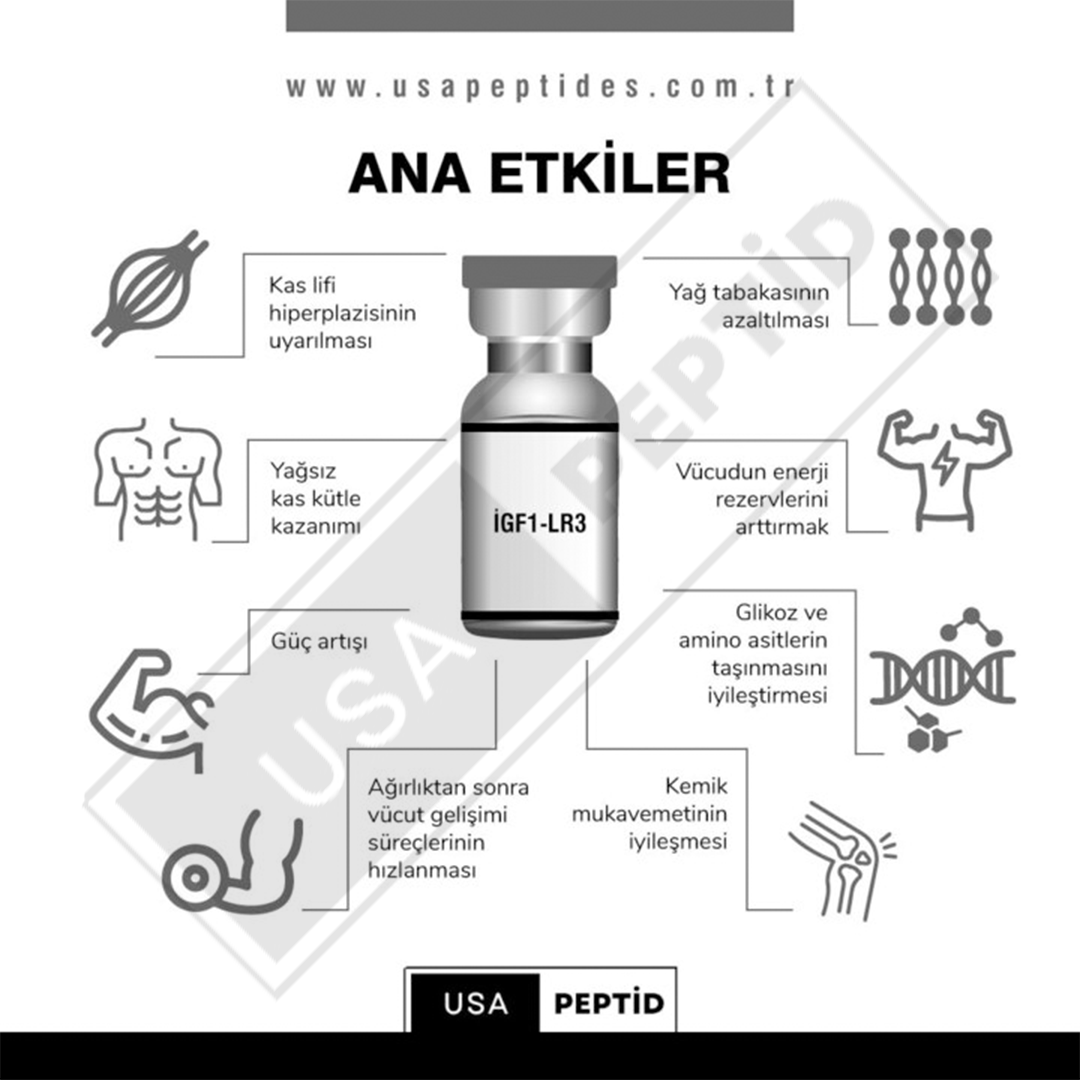
IGF-1 LR3 is a modified, longer-acting analog of Insulin-Like Growth Factor-1 (IGF-1). It is primarily studied for its effects on cellular growth, protein synthesis, muscle tissue, and metabolic signaling.
IGF-1 LR3 may influence nitrogen retention and protein synthesis, which are important processes involved in maintaining and developing muscle tissue. Because IGF-1 signaling plays a role in cellular growth and regeneration, the compound has attracted particular interest in muscle-growth and tissue-repair research.
Experimental research has examined whether IGF-1 LR3 may influence processes such as:
IGF-1 LR3 is sometimes associated with concepts such as hypertrophy, which refers to an increase in muscle-fiber size, and cellular proliferation. However, claims that it reliably causes new muscle-fiber formation or substantial muscle gain in humans are not firmly established by high-quality clinical evidence.
Because IGF-1 signaling can affect different tissues in different ways, its biological effects are not limited to skeletal muscle.
Research and experimental discussions have examined possible effects related to:
Claims that IGF-1 LR3 reliably increases libido, treats depression, or significantly improves cognitive function are not established clinical benefits.
IGF-1 LR3 remains an experimental research compound, and its long-term safety and effectiveness in humans have not been firmly established. Because IGF-1 pathways can affect glucose regulation and cellular growth, unsupervised use may carry significant risks.