
-
Call Us 0536 986 0950

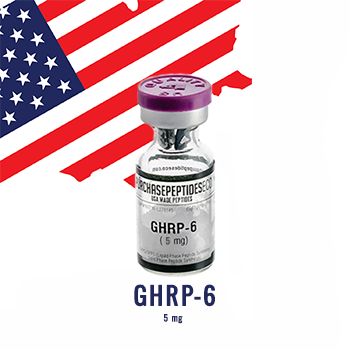
GHRP-6 is a synthetic peptide composed of six amino acids. Its full name is Growth Hormone-Releasing Peptide-6.
GHRP-6 is not growth hormone itself. It acts on receptors associated with ghrelin, commonly known as the hunger hormone, and may stimulate the pituitary gland to release more growth hormone.
Key points to know about GHRP-6 include:
An increase in growth hormone secretion alone does not prove that GHRP-6 is safe or effective for healthy individuals.
GHRP-6 binds to a receptor known as the growth hormone secretagogue receptor (GHSR). This is also the receptor activated by the naturally occurring hunger hormone ghrelin.
Stimulation of this receptor may increase growth hormone release from the pituitary gland. The pituitary is a small gland located at the base of the brain that regulates the production and release of several important hormones.
The effects of GHRP-6 are not limited to direct pituitary stimulation. The body’s own growth hormone-releasing hormone may also contribute to the hormonal response. For this reason, responses can vary between individuals.
GHRP-6 does not replace growth hormone. Instead, it attempts to stimulate the body’s own growth hormone secretion.
Compounds in the GHRP family may also affect hormones other than growth hormone. Changes in cortisol, prolactin, and adrenocorticotropic hormone (ACTH) may occur. These effects are relevant to blood glucose regulation, stress responses, and overall hormonal balance.
Some early human and laboratory studies have shown that GHRP-6 can increase growth hormone secretion. However, it has not been conclusively demonstrated that this biological effect produces lasting muscle gain, significant fat loss, or faster recovery.
Common claims associated with GHRP-6 include:
There are no large-scale, long-term clinical studies confirming all of these claims in healthy individuals.
A significant portion of the available research on GHRP-6 is limited to small study populations, laboratory experiments, or animal research. These studies may help explain how the compound works, but their findings should not automatically be interpreted as treatment recommendations.
An effect observed in a laboratory does not prove that a substance is safe and beneficial for long-term human use.
Claims involving rapid muscle gain, immune enhancement, or anti-aging benefits may also be used for marketing purposes. GHRP-6 has no approved medical indication for these purposes.
Because GHRP-6 can increase growth hormone secretion, it is often associated with muscle growth and fat loss. However, a temporary rise in hormone levels does not automatically result in increased muscle mass or permanent fat loss.
Muscle development and body-fat percentage depend on many factors, including:
Because GHRP-6 stimulates the ghrelin receptor, it may also increase appetite. This can conflict with claims that it is useful for fat loss.
A temporary increase in growth hormone does not guarantee reduced body fat or increased muscle mass.
Likewise, an increase in growth hormone on a blood test does not by itself demonstrate a meaningful improvement in physical performance, muscle strength, or recovery.
There is insufficient information about the long-term safety of GHRP-6 in humans. Potential adverse effects may result from both the compound’s hormonal activity and the quality of the product itself.
Reported or possible effects include:
| Possible Effect | Potential Cause |
|---|---|
| Increased hunger | Ghrelin receptor stimulation |
| Higher blood glucose | Reduced insulin sensitivity |
| Increased cortisol | Stimulation of stress-response pathways |
| Changes in prolactin | Effects on other pituitary hormones |
| Fluid retention | Changes in growth hormone-related pathways |
| Allergic reaction | Response to the peptide or other product ingredients |
| Infection | Use of a non-sterile injectable product |
The FDA has raised concerns regarding certain compounded products containing GHRP-6, including the possibility that manufacturing-related impurities or peptide aggregation could trigger immune reactions.
The risks associated with GHRP-6 do not depend only on the amount used. Purity, sterility, and manufacturing quality also directly influence safety.
Symptoms such as swelling of the face or throat, difficulty breathing, widespread rash, fainting, or changes in consciousness require immediate medical attention.
There is no approved standard dosage or method of use for GHRP-6 in healthy individuals for muscle building, fat loss, or anti-aging purposes.
Microgram calculations, fasting recommendations, and injection schedules shared online are not official medical instructions.
GHRP-6 is not an FDA-approved active ingredient for human use. For this reason, determining a personal dose or following online protocols should not be considered safe.
The absence of an approved dosage does not mean that users can safely determine their own dose.
Reconstituting research-grade powder products at home also introduces additional risks. The following factors may be impossible to verify:
Mixing GHRP-6 with other peptides in the same syringe should also not be assumed to be safe. Compatibility problems, dosing errors, and contamination may occur.
If growth hormone deficiency is suspected, evaluation should be performed by an endocrinologist. Diagnosis is based on appropriate hormonal testing and clinical assessment rather than symptoms alone.
GHRP-6 is often discussed alongside GHRP-2, Ipamorelin, Hexarelin, and CJC-1295. However, these compounds are not identical and may act through different biological pathways.
| Compound | Main Mechanism | Distinguishing Feature |
|---|---|---|
| GHRP-6 | Stimulates the ghrelin receptor | Appetite effects may be more noticeable |
| GHRP-2 | Stimulates the ghrelin receptor | Growth hormone response may differ in strength |
| Ipamorelin | Stimulates growth hormone secretion | Early studies suggest greater selectivity for certain hormonal pathways |
| Hexarelin | Potent growth hormone secretagogue | May also affect cortisol and prolactin |
| CJC-1295 | Acts as a GHRH-related compound | Targets a different hormonal pathway rather than the ghrelin receptor |
Information suggesting that Ipamorelin may have a more selective hormonal profile is largely based on early-stage research. This does not establish that it is safe for personal use.
Peptides marketed for similar purposes are not automatically interchangeable.
The safety of combining different peptides must also be evaluated separately. Online “peptide protocols” or “stacks” are not recognized as standard medical treatments.
The legal status of GHRP-6 varies by country. In the United States, it is not an FDA-approved active ingredient for human use.
The FDA has raised safety concerns regarding certain compounded GHRP-6 products, including:
The fact that a product is sold online does not mean that it is approved for human use.
Products labeled “for research use only” or “not for human consumption” should not be used for personal treatment. Their safe dosage, sterility, effectiveness, and manufacturing standards may not have been established.
In Turkey, official health authority records should be checked to determine whether a product is authorized or licensed. Seller claims, customer reviews, and laboratory certificates do not replace regulatory approval.
GHRP-6 is a synthetic and experimental peptide capable of stimulating growth hormone secretion. There is insufficient safety and effectiveness evidence to support its use for muscle development, fat loss, athletic performance, or anti-aging purposes. Its regulatory status, hormonal effects, potential adverse reactions, and anti-doping implications should be considered before any claims about its benefits.