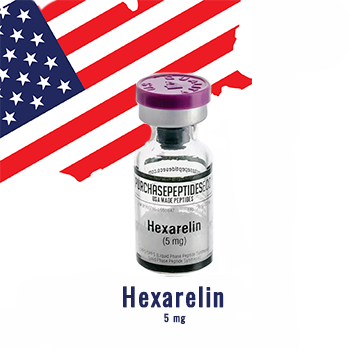
Hexarelin is a synthetic compound belonging to the group of Growth Hormone Secretagogues (GHS). It was developed to stimulate the release of growth hormone (GH) in the body and is sometimes researched or discussed by athletes and individuals interested in bodybuilding as a potential way to support muscle development.
What Is Hexarelin?
Hexarelin is a peptide that acts on the ghrelin receptor. Ghrelin is commonly known as the hunger hormone and is also involved in stimulating growth hormone release from the pituitary gland. Hexarelin works through a similar signaling pathway and can increase growth hormone secretion.
By stimulating growth hormone-related pathways, Hexarelin may indirectly influence processes such as muscle protein synthesis, fat metabolism, tissue repair, and cellular regeneration.
Main Effects of Hexarelin on Muscle Development
Increased Growth Hormone Secretion
One of Hexarelin’s most notable effects is its ability to increase growth hormone (GH) secretion.
Growth hormone is involved in several biological processes related to muscle tissue, connective tissue, and recovery. It also influences collagen production and the GH/IGF-1 axis.
An increase in growth hormone signaling may therefore contribute indirectly to processes associated with muscle development and tissue repair.
Effects on Muscle Protein Synthesis
Hexarelin does not directly stimulate muscle protein synthesis in the same way as amino acids or resistance training. Instead, its effects are primarily mediated through growth hormone and IGF-1 (Insulin-Like Growth Factor-1) signaling.
IGF-1 plays an important role in:
Muscle-cell growth
Tissue regeneration
Protein synthesis
Cellular repair
For this reason, Hexarelin has attracted interest in research involving anabolic and regenerative pathways.
Effects on Fat Metabolism
Growth hormone signaling is also involved in lipid metabolism and lipolysis.
Because Hexarelin can stimulate GH secretion, researchers have examined whether it may indirectly influence the mobilization and utilization of stored fat.
However, this does not mean that Hexarelin is a proven fat-loss treatment or that increased GH automatically results in significant fat reduction.
Potential Effects on Endurance and Recovery
Another area of interest is Hexarelin’s potential influence on recovery.
Growth hormone and IGF-1-related pathways participate in tissue regeneration, which has led researchers to investigate whether Hexarelin may affect recovery from exercise-induced muscle damage.
Potential areas of interest include:
Recovery after intense training
Muscle tissue repair
Connective tissue regeneration
Tendon and ligament-related processes
However, claims that Hexarelin reliably shortens recovery time or prevents injuries in humans have not been firmly established.
Potential Benefits for Muscle Development
Research and experimental discussions have associated Hexarelin with potential effects such as:
Faster recovery: Possible influence on muscle-repair pathways after training
Performance-related effects: Changes in GH/IGF-1 signaling may influence energy and tissue recovery
Muscle-growth signaling: Potential support for anabolic pathways associated with muscle tissue
Body composition: Possible indirect effects on fat metabolism and lean tissue
These potential benefits remain largely investigational.
What Does Scientific Research Say?
Research on Hexarelin includes both animal studies and limited human studies.
Some studies have demonstrated that Hexarelin can produce a significant increase in growth hormone secretion. However, the long-term consequences of this hormonal response and the overall safety profile remain incompletely understood.
Evidence specifically demonstrating substantial muscle growth in healthy humans is limited.
Many of the proposed muscle-related benefits are based on the known physiological roles of growth hormone and IGF-1 rather than large-scale clinical trials showing that Hexarelin itself reliably increases muscle mass.
For this reason, results should be interpreted cautiously.
Possible Side Effects and Important Considerations
Although Hexarelin has attracted attention because of its growth hormone-releasing activity, it may also produce unwanted hormonal and metabolic effects.
Potential concerns include:
Increased Cortisol and Prolactin
Hexarelin may influence hormones other than growth hormone, including cortisol and prolactin. Changes in these hormones may have broader physiological consequences.
Development of Desensitization
Repeated exposure may reduce receptor responsiveness over time, potentially decreasing the hormonal response.
Effects on Glucose Regulation
Growth hormone secretagogues may influence insulin sensitivity and blood glucose regulation. This is particularly important for individuals with diabetes or metabolic disorders.
Cardiovascular Effects
Hexarelin has also been investigated in cardiovascular research. Although some experimental studies have explored potentially protective cardiac effects, its overall cardiovascular safety in non-medical use has not been established.
For these reasons, Hexarelin should not be used without appropriate medical or research supervision.
A Brief Look at Natural Alternatives
Peptides and hormones are not required for muscle development.
Evidence-based strategies for supporting muscle growth include:
Progressive resistance training
Adequate protein intake
Sufficient calorie and nutrient intake
Consistent sleep
Recovery between training sessions
Stress management
Growth hormone secretion naturally increases during deep slow-wave sleep, particularly during the early part of the night. Maintaining good sleep quality and regular exercise therefore supports normal growth hormone physiology.
Hexarelin is an experimental growth hormone secretagogue that may indirectly influence muscle-related pathways by stimulating GH secretion. Its potential effects on muscle growth, recovery, and fat metabolism have generated interest in sports and endocrine research.
However, these effects have not been confirmed through large-scale clinical studies in healthy individuals, and potential hormonal and metabolic risks remain important. When evaluating compounds such as Hexarelin, scientific evidence, professional medical guidance, and established approaches to muscle development should take priority.
Cookies compliant with legal regulations are used so that you can benefit from our website in the best way. By using our website, you accept these cookies. I Accept