
-
Call Us 0536 986 0950

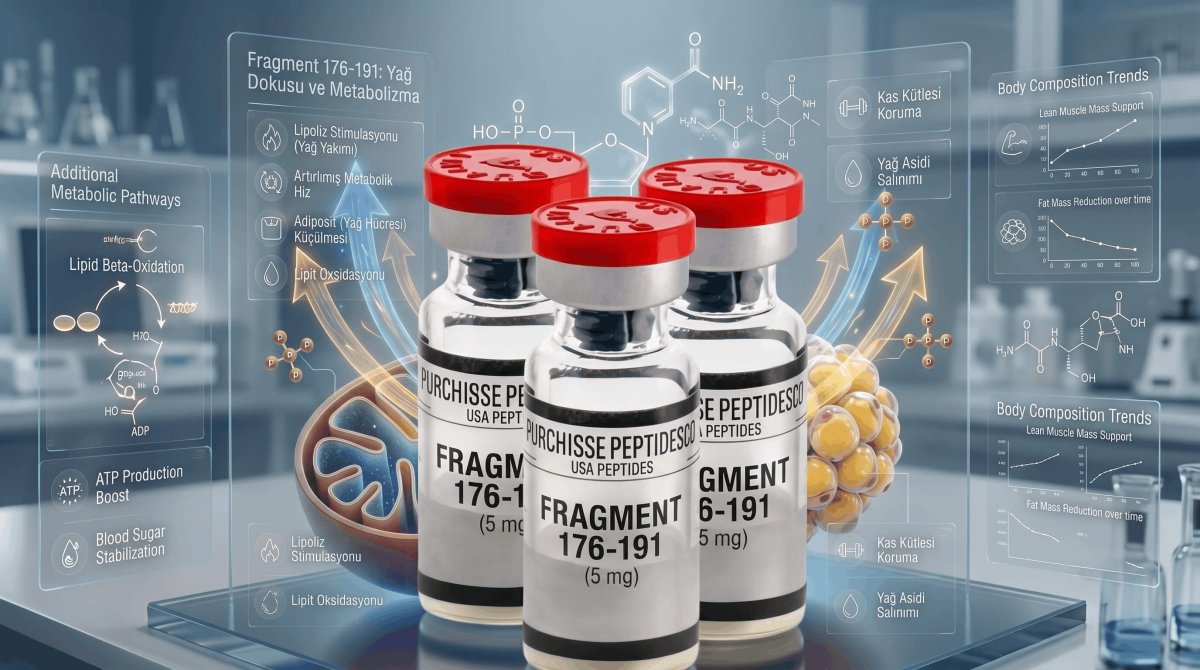
Fragment 176-191 is a peptide derived from a small portion of human growth hormone. It has been studied particularly for its potential effects on fat cells and metabolism. In simple terms, researchers are examining whether Fragment 176-191 may influence certain processes related to how the body stores and uses fat.
However, there is an important point to keep in mind: Fragment 176-191 should not be considered a direct “weight-loss drug” or a guaranteed “fat burner.” Studies conducted so far have not clearly demonstrated that it produces lasting weight loss in humans.
For this reason, it is more accurate to view Fragment 176-191 as an investigational peptide being studied for its effects on adipose tissue and metabolism rather than as a miracle weight-loss compound.
Fragment 176-191 is thought to influence certain processes associated with fat cells. Fat cells act as energy-storage units in the body. When excess energy is consumed, fat is stored; when the body needs energy, these reserves can be mobilized.
Research on Fragment 176-191 has suggested that the peptide may influence some mechanisms involved in the breakdown of stored fat. However, this does not mean that a person will automatically lose weight.
The body does not regulate fat loss through a single compound. Nutrition, physical activity, sleep, hormonal balance, and overall energy requirements all work together.
Fragment 176-191 has been studied for its possible role in processes associated with fat metabolism. Researchers have particularly examined whether it may contribute to the mobilization and use of stored fat as an energy source.
Definitive conclusions cannot currently be drawn. Findings from laboratory or animal studies cannot be assumed to produce the same results in humans.
For this reason, it is reasonable to say that Fragment 176-191 may be associated with fat metabolism, but it cannot be claimed to guarantee weight loss on its own.
Metabolism is the system through which the body converts the food we eat into energy. Fragment 176-191 is primarily studied in relation to the fat-related aspects of this system.
Researchers have investigated whether the peptide may influence fat storage and breakdown. However, metabolism is a broad and highly complex system. Using a single peptide does not mean that the entire metabolism will automatically “speed up.”
Therefore, rather than making definitive claims such as “it accelerates metabolism,” it is more accurate to say that Fragment 176-191 has been studied for its potential effects on fat metabolism.
Fragment 176-191 is not an approved weight-loss treatment. It should not be considered a standard prescription medication with fully established effectiveness and safety for weight management.
The most fundamental factor in weight loss remains the balance between daily energy intake and expenditure. Nutrition, exercise, sleep quality, and overall health are the primary components of this process.
Although research involving Fragment 176-191 is of scientific interest, it would not be accurate to claim that the peptide causes weight loss on its own.
There is insufficient long-term human safety data for Fragment 176-191. Unsupervised use may therefore carry risks.
Individuals with hormonal disorders, diabetes, cardiovascular disease, a history of cancer, or those taking regular medications should not use investigational peptides without medical supervision.
There may also be additional considerations for competitive athletes, as certain growth hormone-related substances or fragments may fall under anti-doping restrictions.
Fragment 176-191 is an investigational peptide studied for its potential effects on fat cells and metabolism. Research has focused particularly on processes involving how fat is stored, mobilized, and used by the body.
Some studies suggest that Fragment 176-191 may influence mechanisms related to fat metabolism. However, these findings do not mean that everyone will experience the same results or that the peptide directly causes weight loss.
For this reason, careful language is important when discussing Fragment 176-191. It should be described as a compound whose effects are still being researched rather than as a substance that guarantees weight loss.
Fragment 176-191 should not be regarded as a miracle fat burner. It is being investigated because of its potential relationship with fat metabolism, but it is not currently considered an approved or definitive solution for weight loss.