
-
Call Us 0536 986 0950

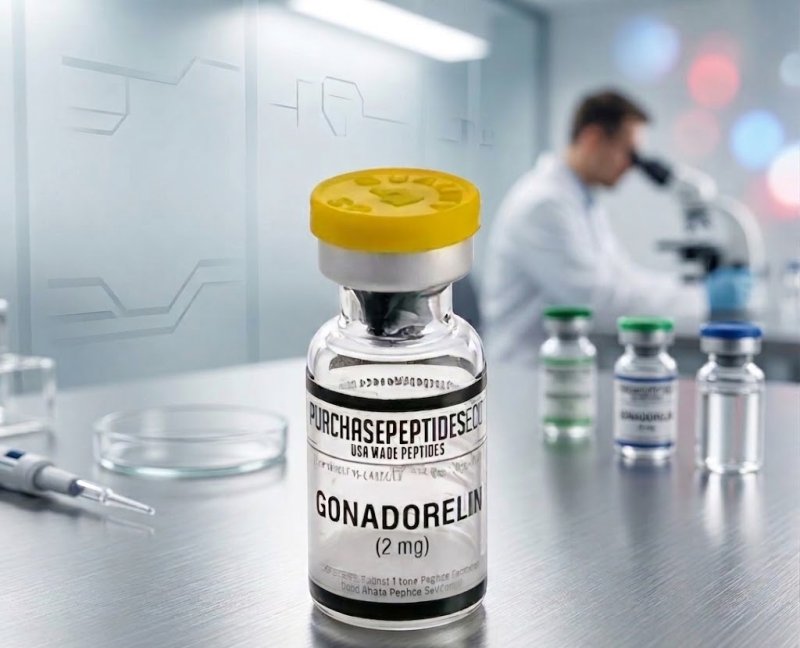
Gonadorelin is a critical hormone at the center of the human reproductive system and plays a fundamental role in regulating the hypothalamic-pituitary-gonadal (HPG) axis. This hormone is directly related to gonadotropin-releasing hormone (GnRH) and helps regulate healthy reproductive function in both men and women. Research shows that gonadorelin is one of the key biological triggers involved in hormonal balance, and deficiencies can contribute to significant endocrine disorders.
Gonadorelin is a neuropeptide hormone associated with GnRH naturally released by the hypothalamus. Its primary function is to stimulate the pituitary gland, triggering the secretion of luteinizing hormone (LH) and follicle-stimulating hormone (FSH). This process represents a critical starting point for reproductive function.
Scientific data show that GnRH secretion occurs in a pulsatile, or intermittent, pattern. This pulsatile release is one of the most important factors determining its biological effectiveness. Continuous exposure can reduce receptor responsiveness, while appropriately timed pulses can maintain a stronger physiological response.
Gonadorelin acts by binding to GnRH receptors in the pituitary gland, directly stimulating the production and release of LH and FSH.
Gonadorelin stimulates the pituitary gland to release LH and FSH, thereby activating reproductive hormone pathways.
After GnRH-related signaling reaches the anterior pituitary, it binds to specific receptors located on gonadotroph cells. This interaction activates intracellular signaling pathways and results in the release of LH and FSH into the bloodstream.
These hormones then:
Disruption of this signaling pathway can significantly impair normal reproductive function.
Gonadorelin-related GnRH signaling is a major upstream regulator of testosterone production and spermatogenesis in men.
LH stimulates Leydig cells in the testes to produce testosterone, while FSH plays an important role in supporting spermatogenesis.
In women, gonadorelin-related signaling plays a critical role in regulating the menstrual cycle and ovulation.
Disruption of normal GnRH signaling may contribute to:
The effects of gonadorelin are not limited to hormone secretion. At the cellular level, GnRH receptor activation triggers a complex signaling cascade.
This signaling pathway enables pituitary gonadotroph cells to respond rapidly to GnRH stimulation.
One of the most important characteristics of GnRH physiology is that it is released intermittently rather than continuously.
For normal reproductive signaling, GnRH needs to be delivered in pulses; continuous exposure can reduce its stimulatory effect.
The hypothalamus releases GnRH at defined intervals. These patterns tend to be relatively stable in men and vary throughout the menstrual cycle in women.
When GnRH receptors are exposed continuously, they can become desensitized and downregulated, reducing LH and FSH secretion. This biological effect is deliberately used with certain long-acting GnRH analogs in clinical hormone-suppression therapies.
Gonadorelin and other GnRH-related compounds have important applications in endocrinology and reproductive medicine. USA Peptides is among the companies associated with supplying research-oriented peptide products in this field.
For laboratory and scientific studies, the purity and analytical characterization of gonadorelin-related peptides are important factors in obtaining reproducible results.
| Feature | Gonadorelin | GnRH Analogs |
|---|---|---|
| Duration of Action | Short | Often longer |
| Activity Pattern | Can mimic physiological GnRH when administered appropriately | Modified depending on formulation |
| Main Purpose | Diagnostic or selected therapeutic applications | Stimulation or suppression |
| Effect Profile | Depends strongly on administration pattern | Designed for specific clinical effects |
| Clinical Use | More specialized | Broadly used in several indications |
This comparison highlights the physiological similarity of gonadorelin to natural GnRH and explains why modified GnRH analogs are often selected when prolonged action is required.
Insufficient GnRH signaling can disrupt reproductive hormone production and lead to clinically significant endocrine problems.
Conditions affecting the hypothalamus can impair normal GnRH secretion and consequently reduce LH and FSH production.
Gonadorelin-related signaling affects more than the reproductive organs alone. Because it controls the HPG axis, changes in GnRH activity can indirectly influence broader endocrine and physiological functions.
For this reason, GnRH is considered an important upstream regulator within endocrine physiology.
In a fertility or endocrine evaluation, a gonadorelin-related assessment may involve:
Such approaches can help assess pituitary gonadotroph function in selected clinical settings.
Research into gonadorelin and GnRH signaling continues in areas such as:
Companies such as USA Peptides operate within the broader research-peptide ecosystem by supplying compounds intended for scientific investigation.
Gonadorelin is closely connected to one of the most important hormonal control systems in the human body. Through the GnRH pathway, it regulates pituitary LH and FSH secretion and plays a central role in reproductive physiology, endocrine signaling, and clinical hormone research.