
-
Call Us 0536 986 0950

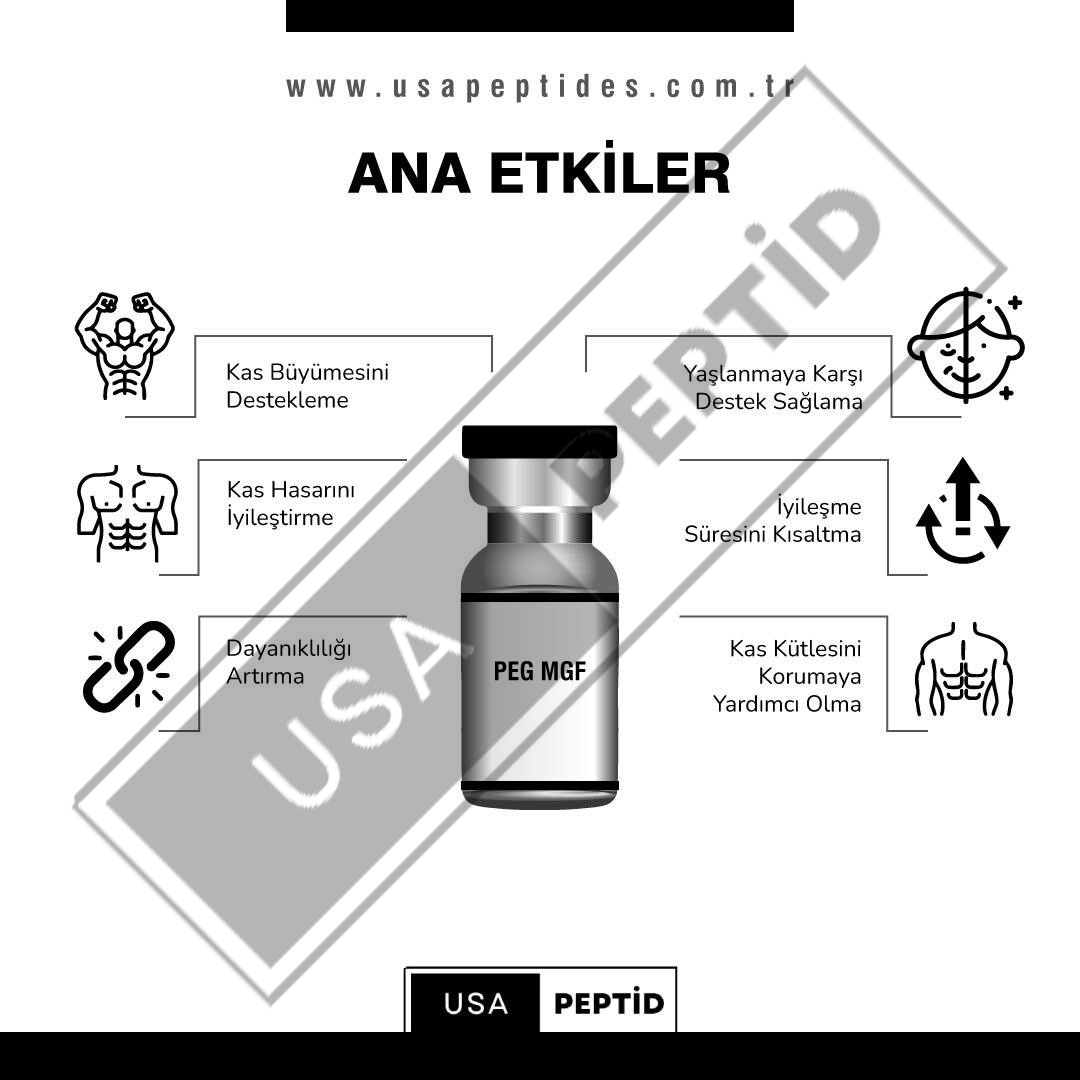
Supporting Muscle Growth: PEG-MGF may support the proliferation and differentiation of muscle-related cells, potentially contributing to muscle tissue growth. This has made it a compound of interest in research focused on muscle hypertrophy.
Supporting Muscle Repair: PEG-MGF has been studied for its potential role in repairing muscle fibers damaged after exercise or trauma. It may influence regenerative processes involved in the recovery of exercise-induced microdamage.
Supporting Endurance: Research has explored whether PEG-MGF may influence muscle function and energy-related processes. However, evidence regarding a direct endurance-enhancing effect in humans remains limited.
Potential Support Against Age-Related Muscle Loss: Because growth-factor signaling changes with age, PEG-MGF has attracted interest in research involving muscle preservation and age-related loss of muscle mass. It is not, however, an established treatment for sarcopenia.
Supporting Recovery: By influencing muscle-repair pathways, PEG-MGF may potentially contribute to shorter recovery periods following intense physical activity or tissue stress.
Helping Preserve Muscle Mass: PEG-MGF has been investigated for its potential role in maintaining muscle tissue during periods of intense training or calorie restriction by influencing anabolic and regenerative signaling pathways.
PEG-MGF remains an experimental research compound, and its effectiveness, long-term safety, and clinical use in humans have not been firmly established.